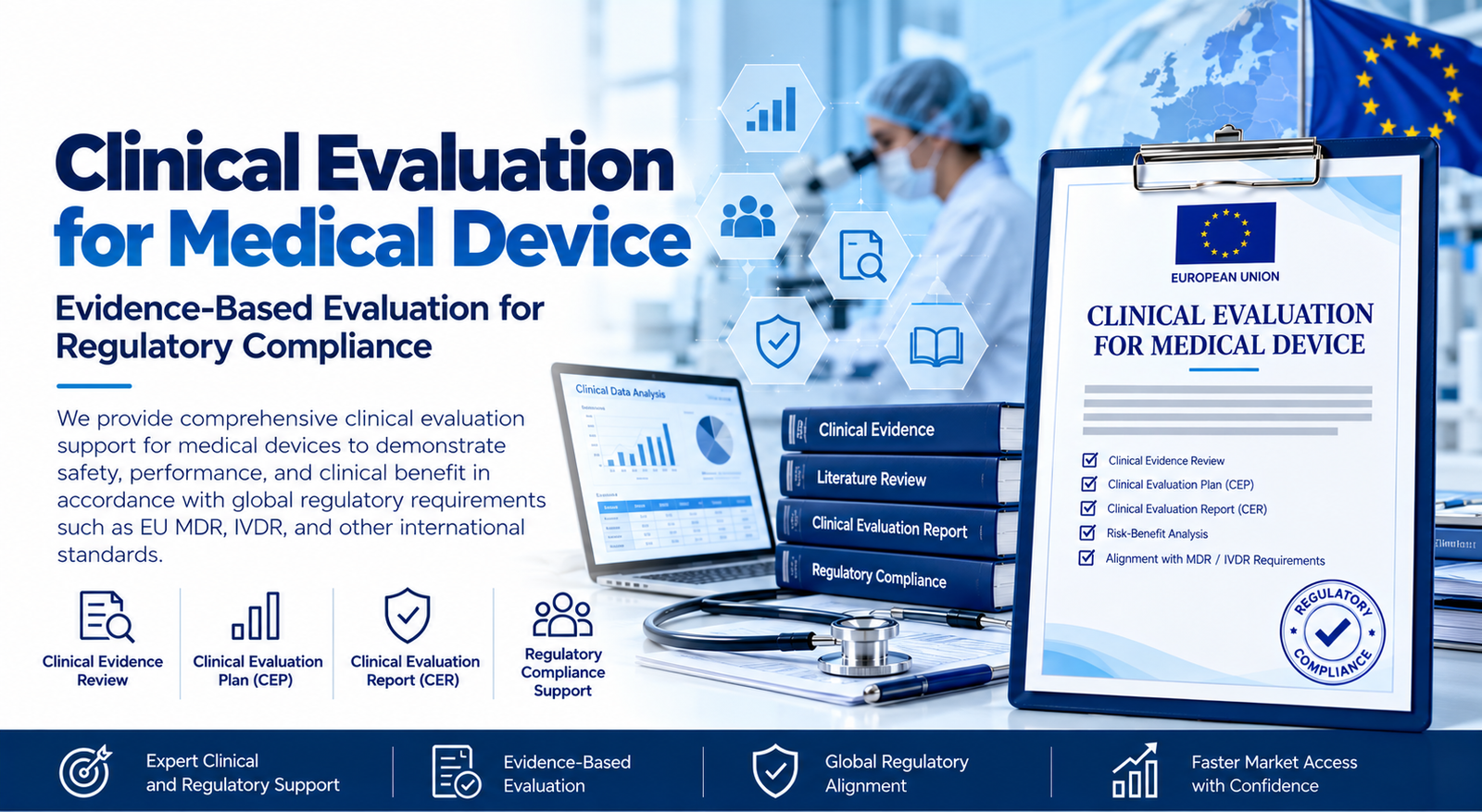
A systematic document known as a Clinical Evaluation Plan (CEP) outlines the technique, scope, and approach for assessing a medical device's clinical safety and performance.
Before beginning the clinical evaluation process, it describes the intended use, clinical claims, evaluation methodology, data sources, and acceptance criteria.
We develop structured Clinical Evaluation Plans (CEP) aligned with applicable regulatory expectations, defining the scope, methodology, clinical claims, data sources, and evaluation pathway for your medical device. This provides a well-documented regulatory approach and aids in the establishment of a clear clinical evaluation strategy.
Structured clinical evidence support to identify relevant scientific literature, assess device equivalence, and strengthen regulatory submissions.
A Literature Search Protocol defines the process for locating and evaluating relevant clinical and scientific publications concerning a medical device or comparable devices.
The identified clinical evidence, published studies, safety data, and performance outcomes are compiled in a Literature Search Report to support clinical evaluation activities and regulatory submissions.
We prepare systematic Literature Search Protocols and comprehensive Literature Search Reports to identify and assess relevant scientific and clinical evidence related to your medical device or equivalent devices.
Supports the demonstration of safety, clinical performance, and regulatory compliance through published literature and clinical data.
Demonstration of equivalence is the process of showing that a medical device is clinically, technically, and biologically equivalent to an already marketed product with accessible clinical data.
Where appropriate, this strategy may support regulatory approval by using existing clinical evidence.
We support equivalence assessments by comparing your device with legally marketed predicate devices across clinical, technical, and biological characteristics.
A structured equivalence assessment helps strengthen clinical evidence and supports regulatory submissions where applicable.
Comprehensive clinical documentation support to demonstrate device safety, clinical performance, benefit-risk acceptability, and continued regulatory compliance.
A Clinical Evaluation Report (CER) is a comprehensive assessment of clinical data demonstrating the safety, clinical performance, and benefit-risk profile of a medical device.
To demonstrate conformity with relevant regulatory criteria, the CER brings together post-market data, equivalence analysis, clinical evidence, and literature review findings.
We prepare complete Clinical Evaluation Reports that include clinical evidence, literature review findings, equivalence analysis, and post-market data to establish the safety and clinical performance of your medical device.
Structured documentation to support regulatory submissions and facilitate smoother approval processes.
Clinical evaluation is an ongoing process that should be updated throughout the device lifecycle based on new clinical evidence, post-market surveillance data, vigilance information, complaints, and significant product changes.
Our update support examines newly available clinical data, published literature, post-market information, complaint trends, vigilance data, and product changes to determine whether updates to the clinical evaluation documentation are required.
We review new data, monitor relevant clinical and safety information, and revise clinical evaluation documentation as necessary.
Helping keep clinical data current, scientifically supported, and aligned with applicable regulatory criteria for ongoing compliance and market access.
Evidence-based clinical evaluation support to strengthen medical device documentation, regulatory submissions, market access, and lifecycle management.
FAQ
Clinical Evaluation is conducted to assess and verify the safety, clinical performance, and benefit-risk profile of a medical device using relevant clinical evidence.
The requirement depends on the applicable regulatory framework and device classification. Many regulatory authorities require clinical evaluation as part of the conformity assessment process.
Literature searches help identify relevant clinical and scientific evidence that can be used to support the safety and performance of a medical device.
Clinical Evaluation is the assessment of available clinical evidence, whereas a Clinical Investigation involves collecting new clinical data through a structured study involving human participants.
Clinical claims describe the intended clinical benefits, performance characteristics, and expected outcomes of the medical device, which must be supported by appropriate evidence.
Fill in the form and our team will get back to you shortly.
Reach our regulatory experts directly.