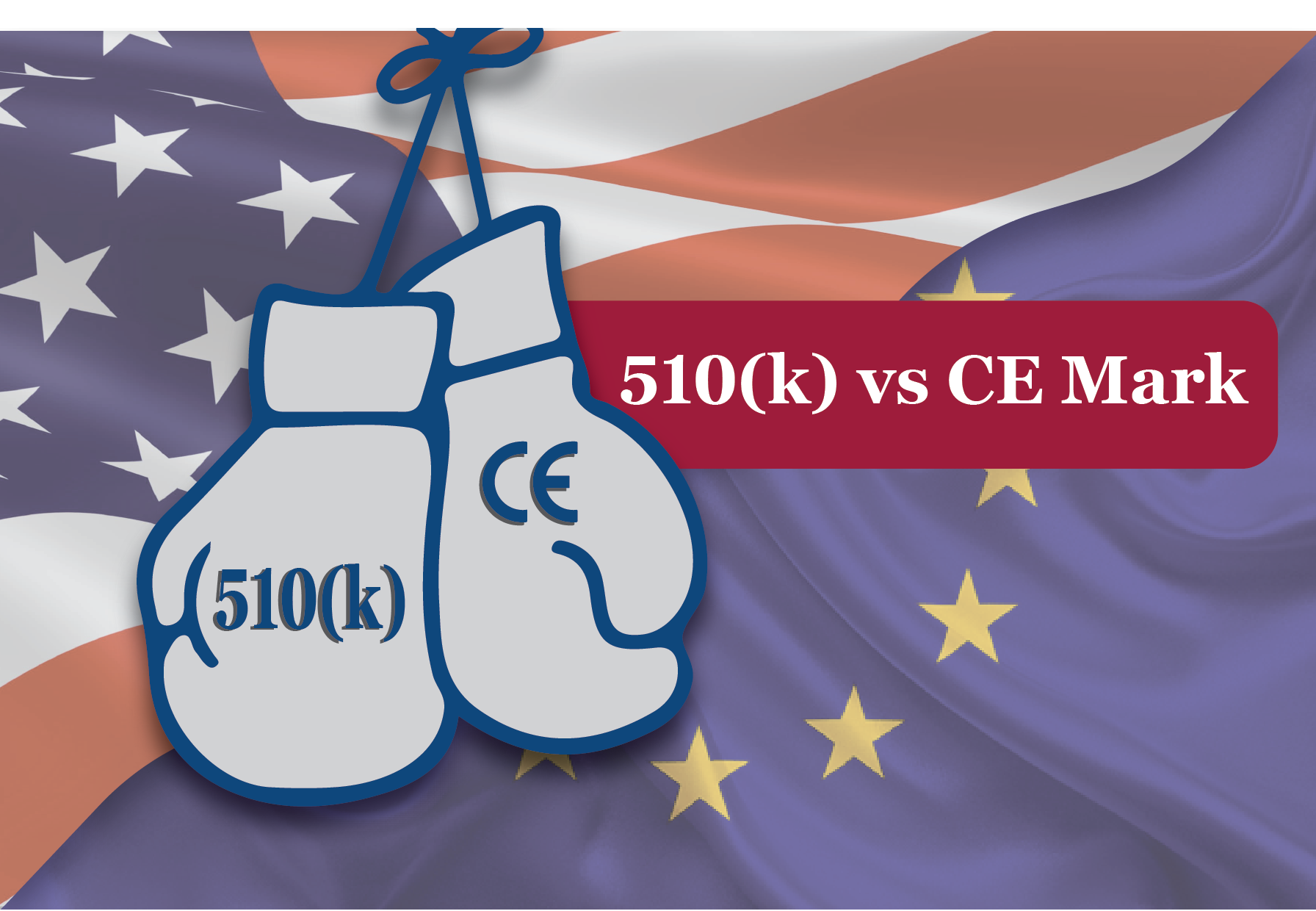
Getting a device designed and tested is the easy part to plan for. The harder part is that each country decides for itself who may sell it, and manufacturers often find this out late. Manufacturers must also understand the regulatory requirements of the country where they plan to sell their products.
The United States, the European Union, and India follow different regulatory pathways. The United States regulates medical devices through the FDA, while the European Union requires CE marking under EU MDR 2017/745.
Three markets, three different systems. In the United States, the FDA determines whether a medical device can be marketed.
This article explains how these three pathways differ and what manufacturers need to know before entering these markets.
US FDA 510(k), CE Marking and CDSCO follow distinct regulatory requirements for medical device market access.
| Particulars | US FDA 510(k) | CE Marking | CDSCO (India) |
|---|---|---|---|
| Market | United States | European Union | India |
| Regulatory Authority / Framework | US FDA | EU MDR 2017/745 | CDSCO – Medical Devices Rules, 2017 |
| Classification | Class I, II, III | Class I, IIa, IIb, III | Class A, B, C, D |
| Main Requirement | Demonstration of Substantial Equivalence | Conformity with applicable EU MDR requirements | Compliance with applicable regulatory and licensing requirements |
| Predicate Device | Required for a 510(k) submission | No formal predicate-device requirement | Separate pathway for the product having predicate devices and not having the predicate devices. Products with predicate generally do not require clinical investigation. |
| Assessment | FDA review of substantial equivalence | Manufacturer’s conformity assessment, with Notified Body involvement where required | Review by the applicable Central or State Licensing Authority. |
| Regulatory Outcome | 510(k) Clearance | CE Marking | Applicable Manufacturing or Import Licence |
Note: Requirements depend on the device, intended use, risk classification and applicable regulatory pathway.
Each market has different documentation requirements. The exact requirements vary depending on the device and its regulatory pathway.
Regulatory clearance or certification in one market does not automatically permit a device to be sold in another. Early regulatory planning can help reduce challenges and avoid unnecessary delays.
Entering a new market requires the right regulatory strategy and well-prepared documentation. At Tacit Medtek Private Limited, we support medical device manufacturers, startups and healthcare businesses with regulatory planning, licensing and compliance assistance.
US FDA
510(k), CE Marking and CDSCO follow different regulatory pathways, but all
focus on ensuring medical device safety, quality and performance.
Understanding these differences before entering a new market can help manufacturers make better decisions, prepare the right documentation and avoid common regulatory challenges.
The right regulatory strategy is an important step in taking a medical device from development to the market.
Tacit Medtek Private Limited – Supporting Medical Device Manufacturers through their Regulatory Journey.
FAQ
FDA 510(k) demonstrates substantial equivalence, CE Marking demonstrates conformity with applicable EU requirements, and CDSCO regulates medical devices in India.
No. FDA 510(k) clearance does not replace CE Marking or applicable CDSCO licensing requirements.
The US uses Classes I, II and III; the EU uses Classes I, IIa, IIb and III; and India uses Classes A, B, C and D.
Common documents include device descriptions, technical documentation, safety and performance reports, and quality management documents. Specific requirements vary by market and pathway.
Tacit Medtek supports FDA 510(k) submissions, EU MDR technical documentation and CE Marking, and CDSCO classification, licensing and documentation.
Fill in the form and our team will get back to you shortly.
Reach our regulatory experts directly.